I own and work a Texas ranch. I compete in equestrian events on weekends. And every week, I help ranch, land, and equestrian buyers and sellers across North and West Texas make sense of a market
Dated: September 15 2026
Views: 18
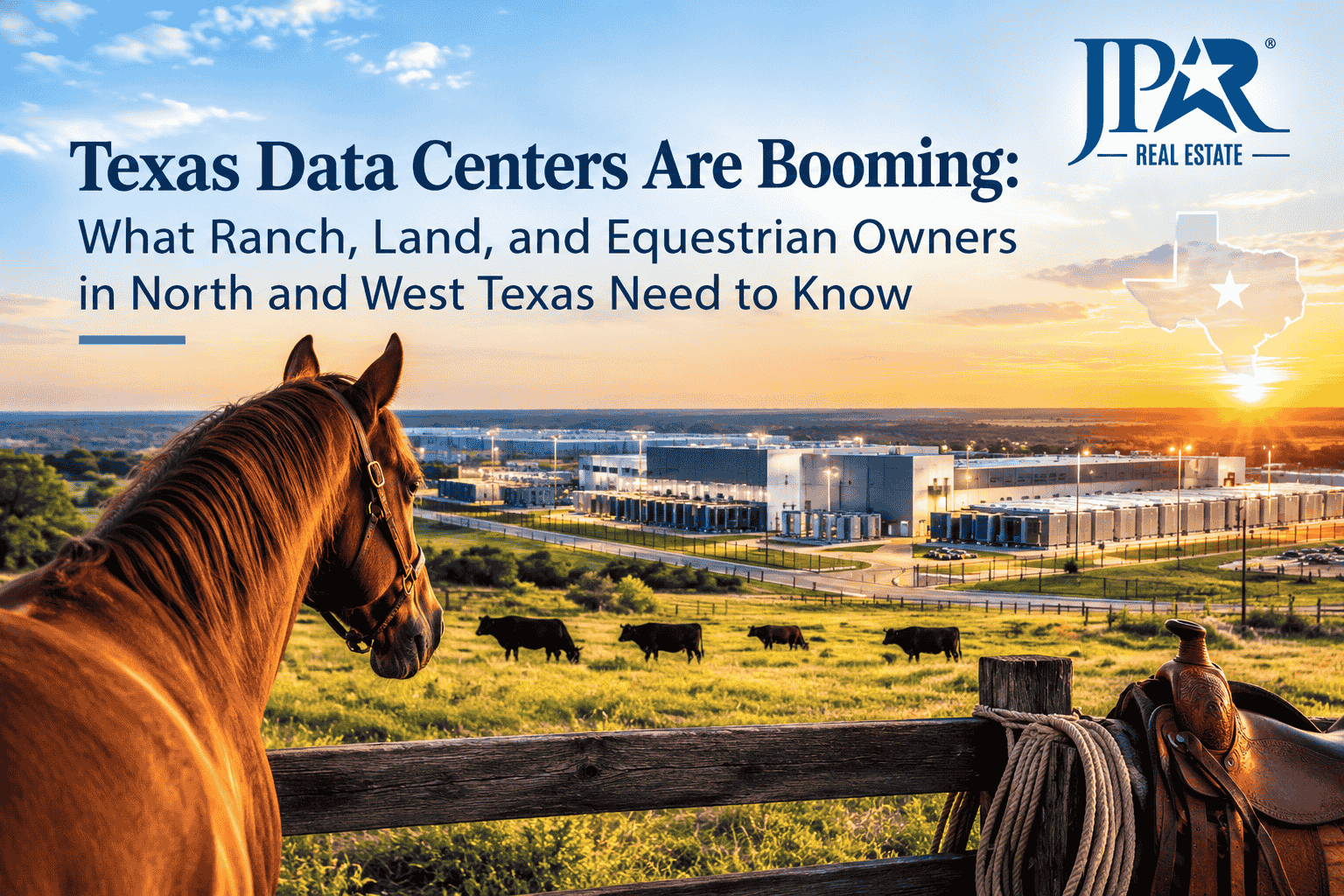
I own and work a Texas ranch. I compete in equestrian events on weekends. And every week, I help ranch, land, and equestrian buyers and sellers across North and West Texas make sense of a market that is changing faster than most of them realize. So when clients start asking me about data centers showing up near their pastures, I don't answer as an outside observer I answer as someone who lives with the same land, water, and infrastructure questions they do.
Texas has always been known for wide-open ranches, working farms, horse properties, and large stretches of undeveloped land. Now, another type of development is rapidly changing that landscape: data centers.
Driven by artificial intelligence, cloud computing, and the growing demand for digital services, data-center development is expanding across the state. Texas already has hundreds of operating data centers, with many more planned and a noticeable share of that growth is landing in the same rural counties where my clients raise cattle, run horses, and build their lives.
For Texas, this growth can bring investment, jobs, tax revenue, and new infrastructure. But for people who have spent generations working the land, the question is becoming harder to avoid:
What happens to rural Texas when technology begins competing with agriculture for the same land, water, electricity, and infrastructure?
One of the biggest concerns is simple: land is finite.
Large data-center campuses can require hundreds or even thousands of acres. In rural areas, that puts agricultural land directly into competition with industrial development.
The Texas Tribune recently reported on a fourth-generation farmer who lost access to hundreds of acres after his landlord sold the property to a buyer connected to a Google data-center development. The farmer had crops already growing on the land and was given a limited window to finish the harvest.
For farmers and ranchers, losing acreage isn't simply losing a piece of property. In my own conversations with sellers, I see it show up as:
For a large ranch, even losing or isolating a relatively small portion of the property can change how the entire operation functions something I walk through with every ranch seller I represent.
Texas already understands how valuable water is. Ranchers depend on reliable water for livestock. Farmers need it for crops. Rural households depend on wells and groundwater. Wildlife and surrounding ecosystems depend on those same resources.
Data centers can require significant amounts of water depending on their cooling systems and local climate. Texas A&M AgriLife Extension researchers have identified land, water, and energy competition as major issues rural communities should weigh when evaluating data-center development.
Recent Texas debates show how sensitive this issue has become. In West Texas, conflicts over groundwater have involved ranchers, farmers, cities, and regional water suppliers competing over a limited aquifer.
That raises an important question for rural property owners: if water becomes more valuable and industrial demand increases, who gets priority?
As a competitor myself, this is the section I care about most. For equestrian owners, the concerns can be even more specific than for row-crop or cattle operations. A horse property isn't simply a house sitting on acreage — it's an entire working environment. It can include:
The rural environment itself is part of the property's value. Construction activity, heavy truck traffic, bright nighttime lighting, noise, and changes to surrounding open space can all affect the day-to-day experience of operating an equestrian property things I evaluate on every equestrian listing I take.
These impacts don't necessarily mean every data center will create problems for nearby horse owners. Much depends on site design, setbacks, construction schedules, lighting, roads, and environmental controls. But when an industrial-scale facility is placed close to horse properties, the compatibility of the two land uses deserves serious consideration both from buyers evaluating a purchase and from sellers pricing a property honestly.
One of the reasons people buy ranch and equestrian properties is the peace and privacy they provide. That can be difficult to preserve when large industrial projects arrive nearby.
Construction can bring:
Once a facility is operational, there may also be mechanical equipment, backup power systems, security lighting, and other infrastructure running around the clock.
The Texas Tribune reported that agricultural land near a Texas data-center development experienced heavy construction traffic and bright construction lighting. For someone living on a rural ranch, these aren't minor inconveniences they can fundamentally change the character of the property.
Data centers don't just need buildings and computers. They need enormous amounts of electricity. That means new substations, transmission infrastructure, power lines, and other supporting facilities may be required.
Texas has already approved major transmission investments intended to accommodate rapidly increasing power demand. Some of these projects have generated strong opposition from ranchers and landowners concerned about transmission routes crossing their properties and about who ultimately pays for the infrastructure.
For ranch owners, a transmission line can mean more than a line visible from the front porch. Depending on the route and easement, it can affect:
This is where the conversation becomes complicated. Data centers can bring investment and economic activity to a region. Some property owners may benefit from increased demand for land or infrastructure improvements.
But the opposite can also happen. A buyer looking for a secluded Texas ranch, horse property, or recreational estate may not place the same value on acreage located next to an industrial facility, major transmission line, or high-traffic construction corridor.
In other words, the value of rural land isn't determined by acreage alone. Location, privacy, views, water, accessibility, surrounding land use, and future development all matter and all factor into how I price and market a ranch or equestrian property.
The data-center debate isn't simply about technology versus agriculture. Texas needs both.
Artificial intelligence and cloud computing are creating enormous economic opportunities. At the same time, agriculture, ranching, equestrian businesses, and rural communities remain an essential part of Texas's identity and economy.
The real challenge is finding a way for development to happen without unnecessarily sacrificing the land and resources that make rural Texas special. That could mean better planning, stronger local input, careful site selection, responsible water management, appropriate setbacks, protection of agricultural land, and fair allocation of infrastructure costs.
If you're a rancher, farmer, horse-property owner, or someone considering buying rural Texas land, it's worth looking well beyond the property lines. Before you write an offer, I encourage every client to investigate:
Because when you're buying a Texas ranch or equestrian property, you're not just buying the house and the acreage. You're buying the environment around it.
This is exactly the kind of due diligence I walk clients through every day. As a Texas ranch owner, equestrian competitor, and real estate agent who specializes in acreage, ranch, and equestrian properties across North and West Texas, I bring a perspective most agents simply don't have: I understand what it actually takes to run land, keep horses, and manage livestock not just what it takes to close a transaction.
Whether you're evaluating a ranch purchase, weighing whether to sell acreage near a proposed development, or simply want a second opinion on how nearby growth could affect your property's value, I'd welcome the conversation.
If you're considering a move in North or West Texas ranch, land, or equestrian real estate, reach out. I'll help you look past the fence line and understand what you're really buying or selling.
Devon Camilleri
JPAR
Texas Real Estate License #0787195
Phone: 817-550-2241
Email: devoncamilleri@jpar.net

I am a native Californian and followed in my dad's footsteps to become a full time real estate professional in Southern California for over 30 years. In October of 2020 my husband and I relocated to T....
I own and work a Texas ranch. I compete in equestrian events on weekends. And every week, I help ranch, land, and equestrian buyers and sellers across North and West Texas make sense of a market
For most of Texas history, a piece of land was priced on the obvious things. Acreage. Grass. Road frontage. Whether the fences held and the barn was standing.That's changing fast. Across most of the
When you live on acreage, preparing for an emergency isn't just about protecting your home. It's about protecting every animal that depends on you.Living with horses, livestock, and pets is one of
Howdy, future homeowners! 🤠If you've been thinking about planting your roots in the great state of Texas—especially in *Fort Worth*—now might just be your golden moment. Let’s
 © 2026 North Texas Real Estate Information Systems, Inc. All rights reserved. Disclaimer: All information deemed reliable but not guaranteed and should be independently verified. All properties are subject to prior sale, change or withdrawal. Neither listing broker(s) nor JPAR® - Dallas/Fort Worth shall be responsible for any typographical errors, misinformation, misprints and shall be held totally harmless. The database information herein is provided from and copyrighted by the North Texas
Real Estate Information Systems, Inc. NTREIS data may not be reproduced or redistributed and is only for people viewing this site. All information provided is deemed reliable but is not guaranteed and should be independently verified. The advertisements herein are merely indications to bid and are not offers to sell which may be accepted. All properties are subject to prior sale or withdrawal. All rights are reserved by copyright.
Data last updated: September 22, 2026 8:07 PM UTC
Show More...
© 2026 North Texas Real Estate Information Systems, Inc. All rights reserved. Disclaimer: All information deemed reliable but not guaranteed and should be independently verified. All properties are subject to prior sale, change or withdrawal. Neither listing broker(s) nor JPAR® - Dallas/Fort Worth shall be responsible for any typographical errors, misinformation, misprints and shall be held totally harmless. The database information herein is provided from and copyrighted by the North Texas
Real Estate Information Systems, Inc. NTREIS data may not be reproduced or redistributed and is only for people viewing this site. All information provided is deemed reliable but is not guaranteed and should be independently verified. The advertisements herein are merely indications to bid and are not offers to sell which may be accepted. All properties are subject to prior sale or withdrawal. All rights are reserved by copyright.
Data last updated: September 22, 2026 8:07 PM UTC
Show More...
